


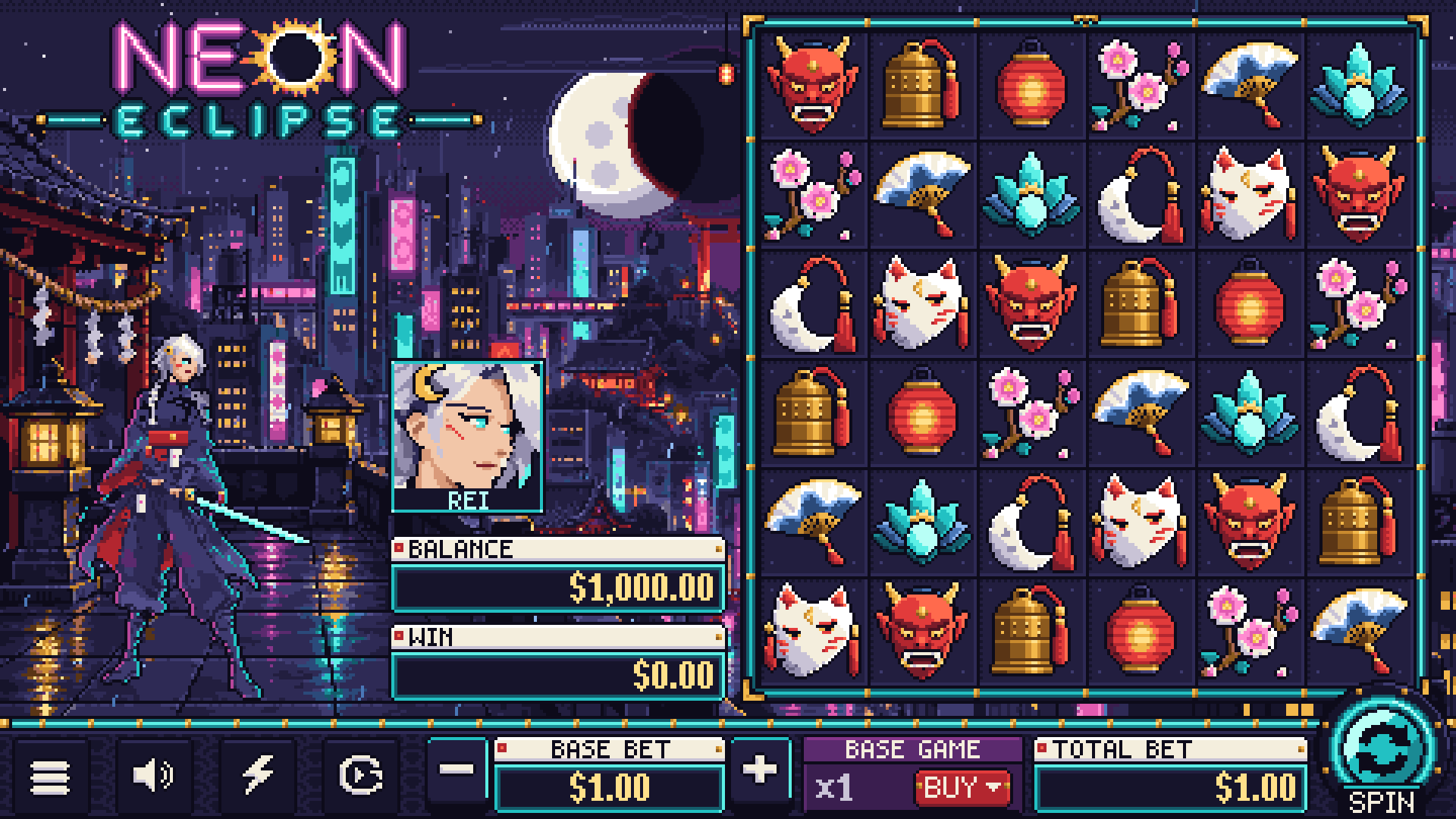
Neon Eclipse sets a pixel-art shrine beneath a neon moon, with eclipse imagery framing its 6×6 cluster board. Matching groups clear from the grid and tumble into new positions, while Moon Wards can build value on cells for later wins.
Quick take: A neon cluster slot where tumbling wins develop Moon Ward multipliers across the board.
Theme and Gameplay
The pixel-art setting gives the board a distinct cyberpunk look, with moon, shrine and eclipse motifs framing the action. Ordinary spins are about spotting matching clusters and watching what falls into the cleared spaces. A tumble can create another cluster, so the board may keep changing after its first win. Moon Wards add a second thing to follow: they mark cells as clusters clear and progress through multiplier levels that later cluster wins can collect.
Slot Features
Eclipse Seals serve a different purpose from paying clusters: three or more start Total Eclipse, which awards ten free spins. Moon Wards persist through the feature, giving the new spins a board already developing multiplier value. That carryover gives the bonus a clear link to the base game rather than making it a separate round with unrelated rules. Spirit Lure is an optional buy mode that raises Eclipse Seal frequency to increase the chance of reaching Total Eclipse. It changes how often the feature is pursued, while the seals themselves still need to land for the bonus to begin.
Feature focus: After a cluster clears, check which cells gained Moon Wards and whether a later tumble can connect a winning cluster to their accumulated multipliers.
RTP and Win Potential
The listed RTP is 96.50%. Cluster clears and later wins collecting Moon Ward multipliers provide the documented prize action. The game is described as high volatility, so a board that builds over several tumbles can still produce uneven results.
My Thoughts On This Slot
A cleared cluster leaves something else to inspect in Neon Eclipse: the cells gaining Moon Wards. Following the next tumble means watching both the new symbols and whether a winning cluster reaches those developing multipliers. That gives the changing board a useful continuity, with earlier clears contributing to the interest of later results.
Total Eclipse extends that idea by keeping Moon Wards through its ten free spins. The feature builds on a familiar interaction, which is a more convincing use of the grid than introducing an unrelated diversion. Still, reading clusters while tracking cell multipliers demands attention. The pixel-art shrine gives that activity a distinctive setting, but the high volatility means visible development should not be mistaken for dependable returns.
Final Take: Neon Eclipse gives its tumbling cluster game momentum through Moon Wards that carry forward.