


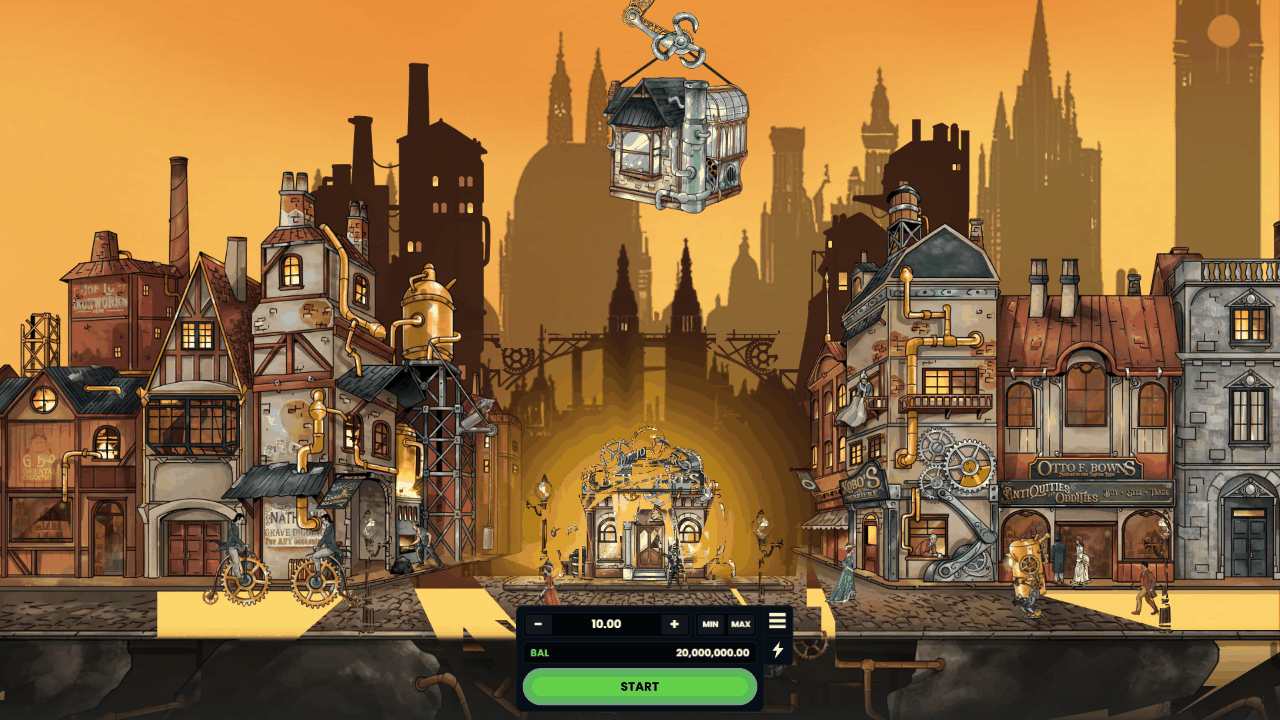
Clockwork Crash by DiJoker places a rising-multiplier game inside a steampunk machine. The multiplier increases in real time, and the central decision is when to use Instant Cashout to lock in a win before the crash. The brass cogs and steam give that timing decision a fitting industrial setting.
Quick take: Watch the multiplier rise and choose when to cash out before the machine crashes.
Theme and Gameplay
The game's Victorian city setting is full of factories, airships and heavy machinery. Inside the engine room, brass cogs and copper pipes turn the presentation into a machine under pressure. The theme supports what you are watching: a result developing over time rather than a fixed arrangement of symbols.
The multiplier is the main number to follow as the round unfolds. It rises continuously, keeping the decision in view. There is no line of symbols to connect; attention stays on the moving value and the opportunity to cash out.
Game Features
Instant Cashout lets you lock in a win before the crash occurs. That makes taking the current result an active choice, rather than waiting for a reel board to finish calculating. Continuing leaves room for the multiplier to rise farther, while taking the win ends that wait.
The game's feature structure stays focused on this one trade-off. The steam-driven machine provides the spectacle, and the changing multiplier supplies the value you are watching. Choosing a cash-out point is the defining action around which the presentation is built.
Feature focus: Follow the current multiplier and your cash-out decision together. A higher value on the screen still needs to be locked in before the crash.
RTP and Win Potential
Clockwork Crash has high volatility and a 10,000x maximum win. That maximum is a ceiling, not a typical cash-out target. A multiplier that has continued rising does not promise that it will keep going, so the previous stretch of the round is not a guarantee of more time.
My Thoughts On This Game
The machine-under-pressure theme fits a cash-out game well. Cogs, steam and the engine room all reinforce the sense of a process building, while the multiplier keeps the important number visible. The result is easier to follow than a feature packed with several separate symbol rules.
That simplicity can also make the timing decision feel exposed: taking a win means giving up any further rise in that round. This should appeal to someone who enjoys deciding when to settle a moving result. A player who prefers to start a spin and let the game complete its own sequence may find the repeated cash-out choice less relaxing.
Final Take: A steampunk crash game that keeps the rising multiplier and the decision to lock in a win at the center of the experience.